

Hey there, let’s talk about burnout and prioritization.
Essence: Strive for focus and prioritize what matters most in the moment. Be proactive and transparent to talk about what you CAN do and what you WANT to do. This protects your motivation and energy, and helps to avoid burnout.
Over the last 10 years I’ve learned to be more self-aware and to better self-manage. In difficult and busy times I struggled with prioritization. That is why I now regularly review goals and priorities ensuring I have a balance between the ones energize me, and the ones that matter the most for the business. And thankfully many of them intersect.
Burnout
I’ve been in two self-diagnosed burnouts throughout my career. I also had a couple of early indications of it happening again, in those cases I took a step back and took actions to prevent it. While you are going through burnout, it is tough, you don’t have the same energy, you have less patience towards others, you have less patience towards yourself. It sucks. In this post I want to talk about what was the major causes that made me feel exhausted and defeated, and how I overcame it.
If you think you are going through burnout, talk to family and friends, and look for specialized help.
In both situations, when I burned out, things that I considered important all of a sudden weren’t important anymore. I had no energy or willingness to engage in discussions. I felt like everything I did was poor quality. People would try to cheer me up and I would only think how an impostor I’ve been. I strongly believed I was not good at what I was doing, I didn’t think I deserved my job, or people’s respect. For weeks I would be like a corporate zombie, going from one meeting to the next, reworking whatever I had done previously thinking it was bad, sometimes it would be code, sometimes documents, presentations, it didn’t matter the medium or the output, I would judge it to be the worst I have ever done.
I was fighting too many battles at once, most in my own head, and most were battles I shouldn’t be fighting.
My internal battles
My first burnout, happened a long time ago. I was living with friends that helped me to get back on track, they don’t know it, I didn’t at the time. I only got to understand what happened once it happened for the second time.
The second time was 5 years later, I was a little more experienced to recognize what was happening. I had seen it in others, heard about it in trainings, in colleagues, but nothing helped me to prevent it from happening to me.
Once it happened, I was in a different mood, grumpy and apathetic.
A more experienced colleague had noticed something was wrong. He invited me for a coffee and asked what was wrong. I lied to him saying all was fine. He said he was sure it wasn’t, and said:
“You know what, I think you need to choose your battles. You can’t win them all, so choose carefully the ones that will make the difference for you and your team.”
Turning things over
That weekend I reviewed my goals, my Personal Development Plan (a one page system I developed over years) and incorporated elements that would help prioritize and focus In other words retreat from the war and choose strategic battles.
In my experience, stress often comes down to communication, either yours with others or yours with yourself, and burning out in my experience was a matter of the later.
5 things I do to choose my battles
I selected 5 tips that helped me to start choosing the battles that matter the most while better communicating to myself and to others:
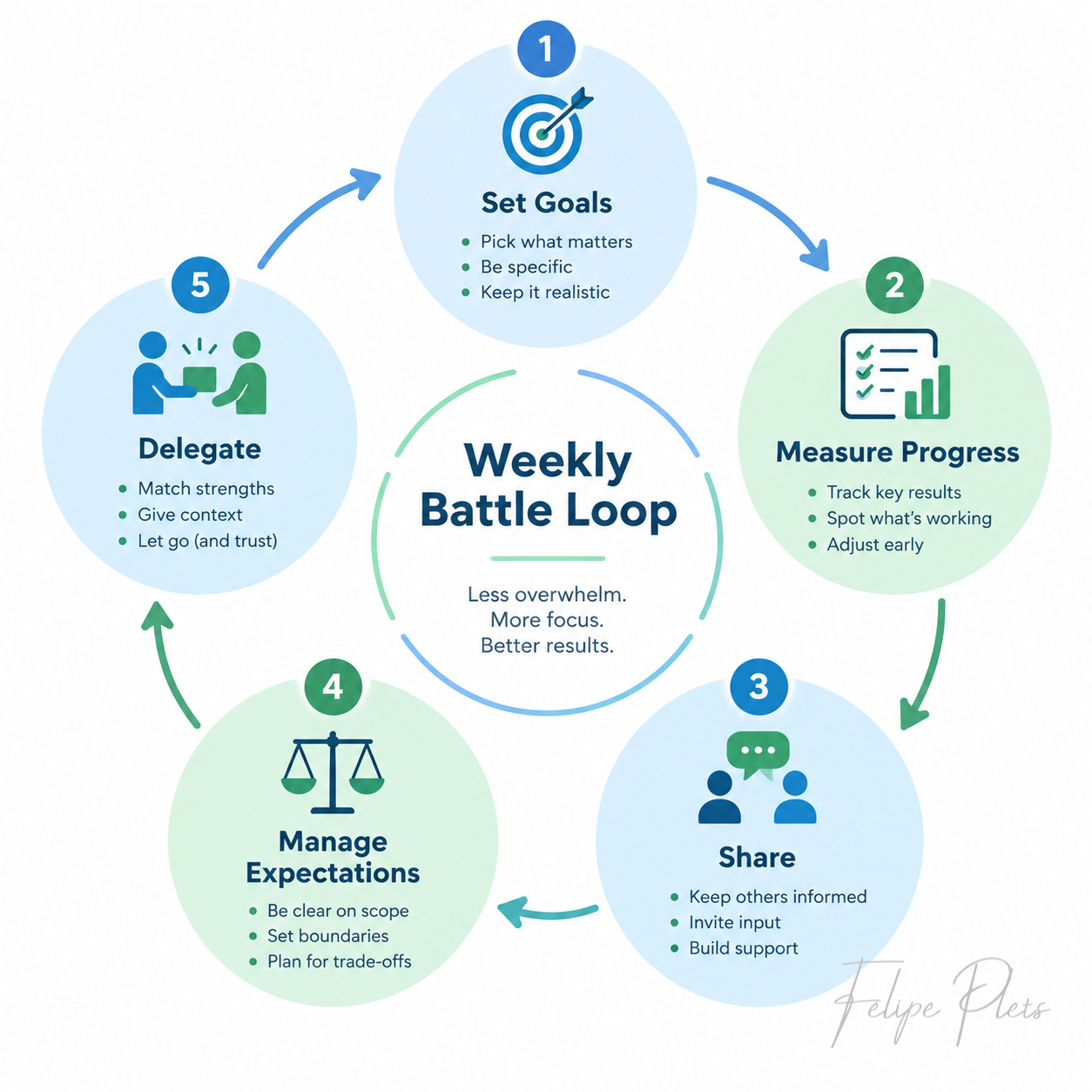
Set goals. Try to come with a number that make sense to achieve what you are looking for in the different areas of your life. I personally categorize my goals in 3 categories and try to have no more than 1 for a 5-years plan, and 3 per category for a 1-year plan. I end up with 3 to 9 goals for the year. I recommend using SMART goals and OKRs to help set good goals. Both are tools that can help you to set goals that are inspiring though meaningful and achievable goals.
Measure progress. Having goals is part of the solution, but if you have to track progress to ensure you are on the right path. The goals won’t be much useful and you may end up starting new battles that don’t help on your goals. That is why I break my goals into quarterly, and weekly goals that are easily measurable, will help me with focus and prioritization.
Share. Making sure that the people that can help you get there understand it is also important. Make sure your family knows you want to loose weight is as important as making sure your colleagues and manager understand you want to be the expert in a subject, this will make people understand your decisions, your inputs and even help you to have the more opportunities to achieve your goals.
Manage expectations. Your goals should be achievable, while possibly inspirational, they should not be too easy, nor too hard. This seems hard, because it is. To set goals is a craft that needs time to mature and to get better at. The best thing you can do is to get to know yourself, your limits, and manage your expectations. Also if you are sharing your goals with other, be open to feedback and make sure to consider and incorporate it if you feel its appropriate. Also, make sure to manage expectations you have on others, some of your goals will need input and support from others to be achieved.
Delegate activities. Another craft that can lead you to be a master at choosing your battlers is delegation. Once you know your goals it will become easier to identify what you should delegate.
Each of these topics would possibly become their own blog post with it’s own nuances and techniques, but understanding the basics of those can help you to choose the rights battles, stand out in the crowd and be happier, all at the same time while avoiding burnout.
Every day is an opportunity to start a fresh new chapter in your life.
You cannot win every battle, but you can win the ones that matter.